-
Description
-
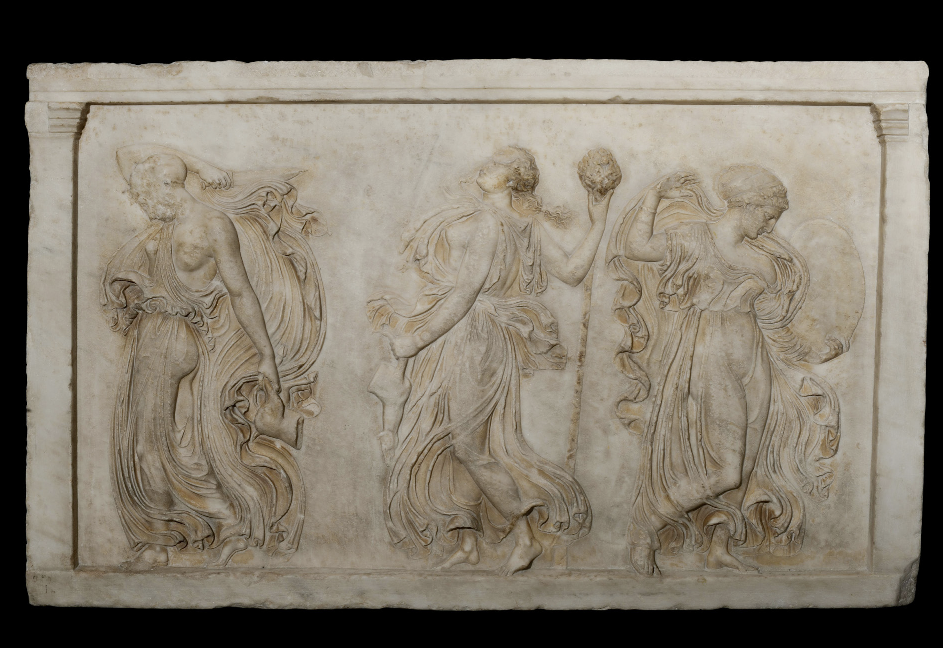
The relief with Dancing Maenads in the Uffizi Galleries represents one of the finest examples of Neo-Attic production of the Roman period, distinguished by both the quality of its execution and its exceptional state of preservation. The work entered the museum’s collections in 1825, following the transfer of a group of ancient marbles from Palazzo Medici Riccardi, and is now displayed in the gallery devoted to Neo-Attic reliefs.
The panel depicts three Maenads engaged in a ritual dance within a Dionysiac context. The figures are shown strictly in profile and oriented in the same direction, advancing in a continuous and rhythmic movement articulated through the alternation of steps and the flowing motion of the drapery. The central Maenad functions as the compositional focal point, while the two lateral figures move in opposite, symmetrical directions, creating a balanced interplay of forms. The women wear chitons and himatia of light, clinging fabric, rendered with exceptional technical refinement through a dense succession of thin, transparent folds that reveal the underlying anatomy. The limbs are elongated and dynamic, the heads slightly inclined, and the hair gathered and animated, all contributing to the ecstatic and processional character of the dance.
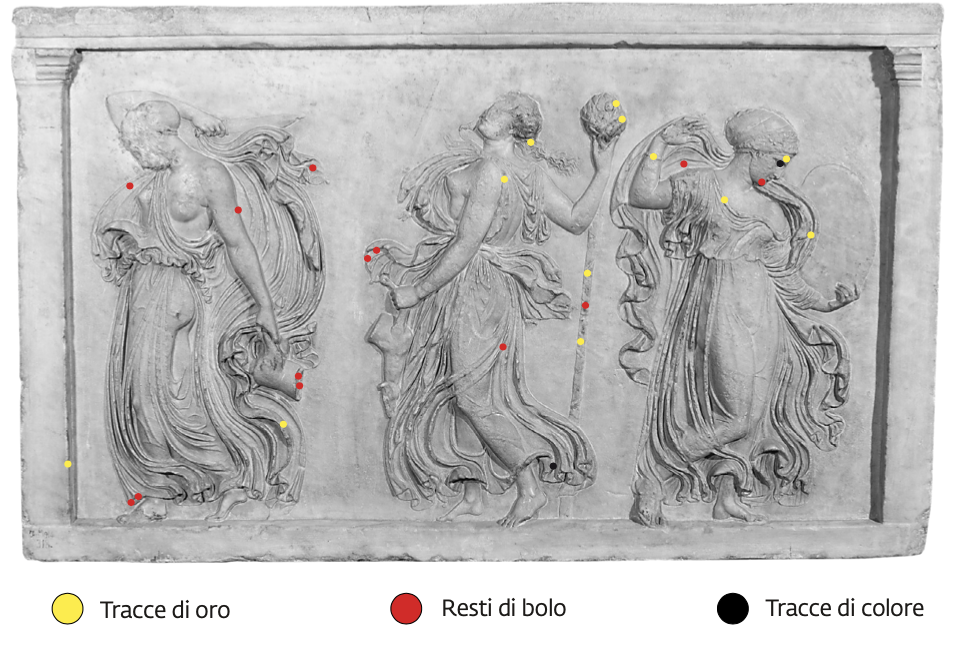
From a stylistic perspective, the treatment of the drapery and the controlled dynamism of the figures reflect the so-called “Rich Style” of the Late Classical period and presuppose the existence of an archetype in high relief dating to the final decades of the fifth century BC. The Uffizi relief belongs to the group of the so-called “Callimachean” types and constitutes an Augustan-period replica, carved in Pentelic marble by a highly skilled Neo-Attic workshop. The extraordinary preservation of the surface, untouched by invasive restorations, has also made it possible to identify limited traces of gilding and polychromy, confirming that the relief was originally conceived as a polychrome work, a subject that is now the focus of more specialized studies.