-
Description
-
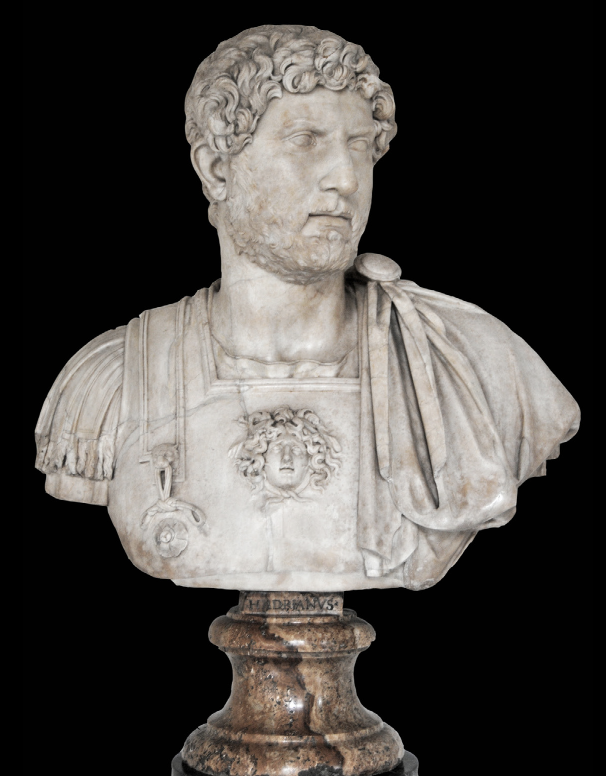
The bust, acquired in 1651 by Cardinal Leopoldo de’ Medici, is documented in the Uffizi Gallery from at least 1704.
The portrait depicts Hadrian with his head turned to the left and is characterized by physiognomic features fully consistent with the emperor’s official iconography. The face is broad and full, with high cheekbones subtly framed by lightly incised nasolabial folds. The eyebrows are slightly contracted, arched, and rendered in relief. The eyes are small and elongated, with smooth, unarticulated eyeballs and deeply carved tear ducts. The nose has a broad, straight bridge, while the mouth is small, with the upper lip thinner and partially concealed by the moustache. The earlobes display the distinctive deep vertical groove regarded as a princely trait.
The beard is carefully groomed and animated, composed of short, softly drilled curls. The hairstyle consists of wavy locks combed forward and closely adhering to the skull at the crown, before gaining volume and movement along the forehead, where thick, overlapping curls frame the face. These are arranged in two superimposed rows, with a characteristic scissor-like motif formed by opposing curls above the left eye. The coiffure follows the scheme of the coma in gradus formata, typical of Roman imperial portraiture from the Neronian period onward.
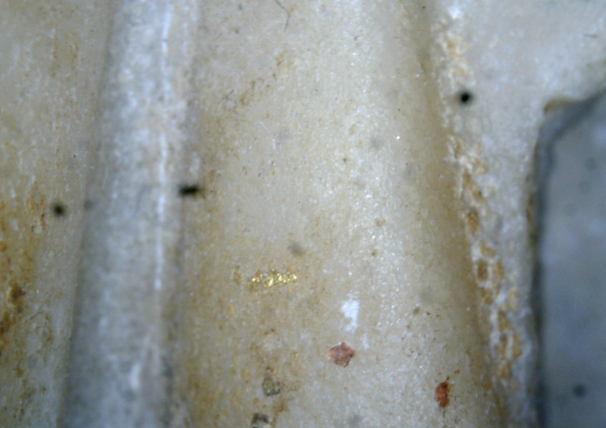
The bust, cut below the pectorals and including part of the arms, depicts the emperor in military attire. He wears a cuirass over a tunic, adorned at the center with a relief gorgoneion, featuring wings and serpents coiling beneath the chin. Over the left shoulder falls a paludamentum, fastened with a fibula; the shoulder strap is decorated with a wolf’s head gripping a knotted ribbon, beneath which appears a six-petaled rosette. Traces of gilding detected on the cuirass attest to the statue’s original polychromy.
The work is a high-quality replica of the so-called “Stazione Termini” type, associated with the official image of Hadrian created between 117 and 118 AD, at the beginning of his reign. The slightly reduced proportions between head and bust, the youthful rendering of the facial features, and the predominant use of the chisel support an early date within the Hadrianic period. The Uffizi bust finds a close and precise comparison in the replica housed in the Palazzo dei Conservatori, differing only in minor formal details.