
Colossal Male Foot with sandal (inv. no. 10326323)
Item
- Other Media
-
 10326323_fig. 1
 -
 10326323_fig. 2
 -
 10326323_fig. 3
 - Description
- The foot wears a sandal with a main strap decorated at its centre with a button. Meticulously polished and detailed, it may originally have belonged to a male divinity. Its findspot is recorded simply as Carthage.
- Typology
- Ideal sculpture
- Definition
- Colossal Male Foot with sandal (inv. no. 10326323)
- Collection
- Tunis, Bardo National Museum
- Inventory number
- 10326323
- Provenance
- Carthage
- Date
- n.d.
- Material
- White marble
- Analytical methods
- VIS
- VIL
- UV
- MO VIS
- MO UV
- MAXRF
- Autoptic examination
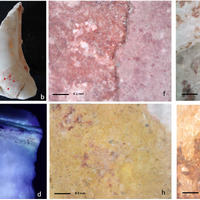
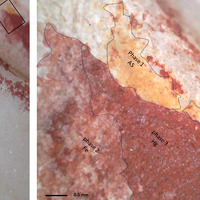
- The main sandal strap preserves superimposed layers of red paint
- Imaging
- The sandal is coloured red, with shadows rendered in black around the toes and along the left side of the principal strap covering the ankle. These shadows, which follow the movement of the foot, are observed only on the right side, between the toes and the horizontal strap. The sole is bright yellow, outlined with red lines. The flesh is tinted orange-yellow, particularly visible and darker on the little toe
- Under painting traces
- no
- Pigments
-
Phase I: calcium sulfate, orange-yellow (mimetite)
Phase II: red ochre
Phase III: vermilion red (cinnabar) - Binder
- n.d.
- Stratigraphy
- Phase I: calcium sulfate preparatory layer
- Shading
- Black spots to accentuate the movement of the foot (Phase II)
- Metallic traces
- no
- Tools marks
- no
- Background colour
- no
- Apparent marble parts
- Skin
- Restorations
- Two phases and one retouch
- Polychromy technique
- The palette is characterised by yellow, orange, and red tones. The skin is coloured in orange-yellow. The final effect likely aimed to evoke the imitation of metal. The black shadows emphasise the movements expressed by the modelling.
- Imitation of other supports
- chryselephantine
- Polychromy type
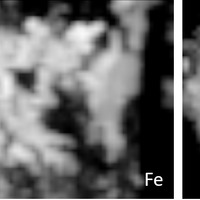
- The relationship between the stratigraphy observed under micrography—where matte layers overlap coloured ones—and the distribution of chemical elements detected by MA-XRF suggests the existence of three phases of polychromy. The first would be orange-yellow, using a very rare imported pigment applied over a gypsum preparation; the second, of lower quality, in red ochre; and the third, concerning only the repainted areas, employs a synthetic pigment, vermilion (cinnabar), widely used in painting during Late Antiquity and continuously into the Middle Ages.