
Statue of Hercules wearing lion skin (inv. no. 24-03-26-326)
Item
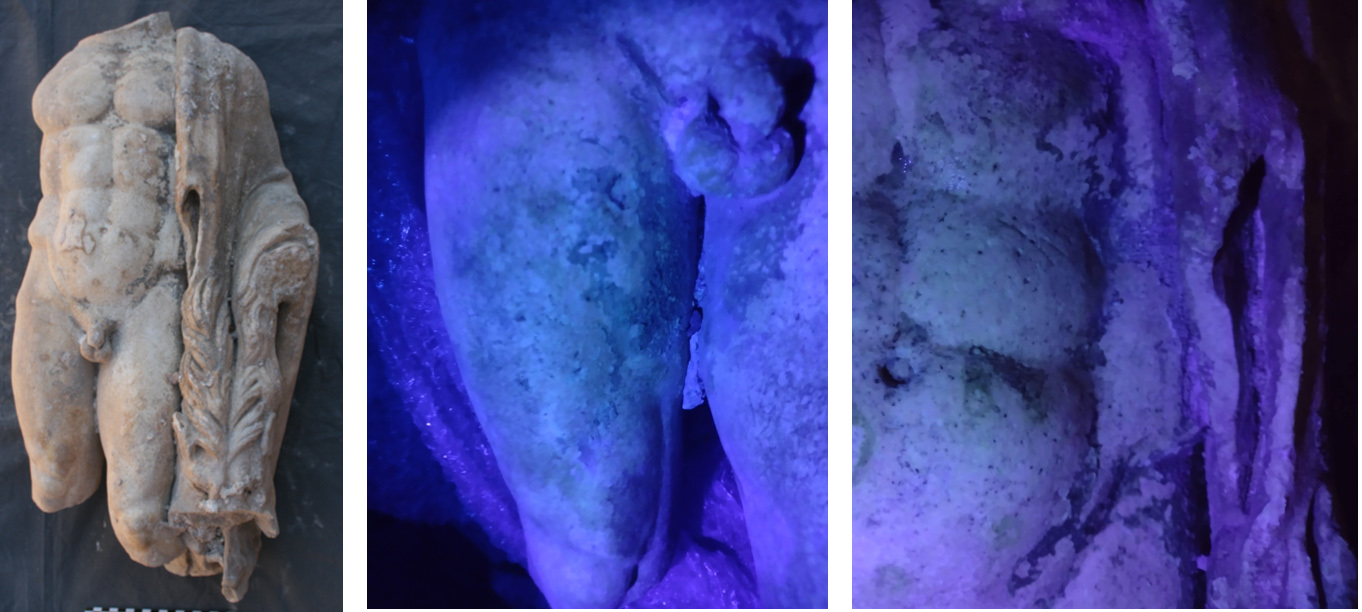
- Description
- The headless statue depicts Hercules, identified by the lion's skin worn on his shoulders, probably resting with his left hand on the mace.
Artwork
- Typology
- Ideal sculpture
- Definition
- Statue of Hercules wearing lion skin (inv. no. 24-03-26-326)
- Collection
- Thugga, reserves.
- Inventory number
- 24-03-26-326
- Provenance
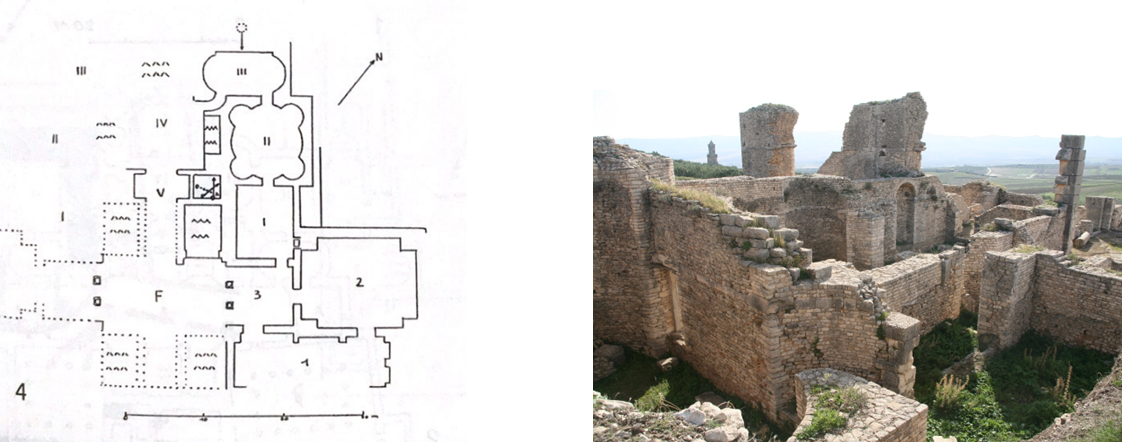
- The statue was found in the gymnasium of the Aïn Doura Baths, in Thugga.
- Date
- 2nd c. CE?
- Material
- Marble.
- Dimensions
- Height: 65 cm (smaller than life size).
Analytical results
- Analytical methods
- VIS
- UV
- MO VIS
- MO UV
- Autoptic examination
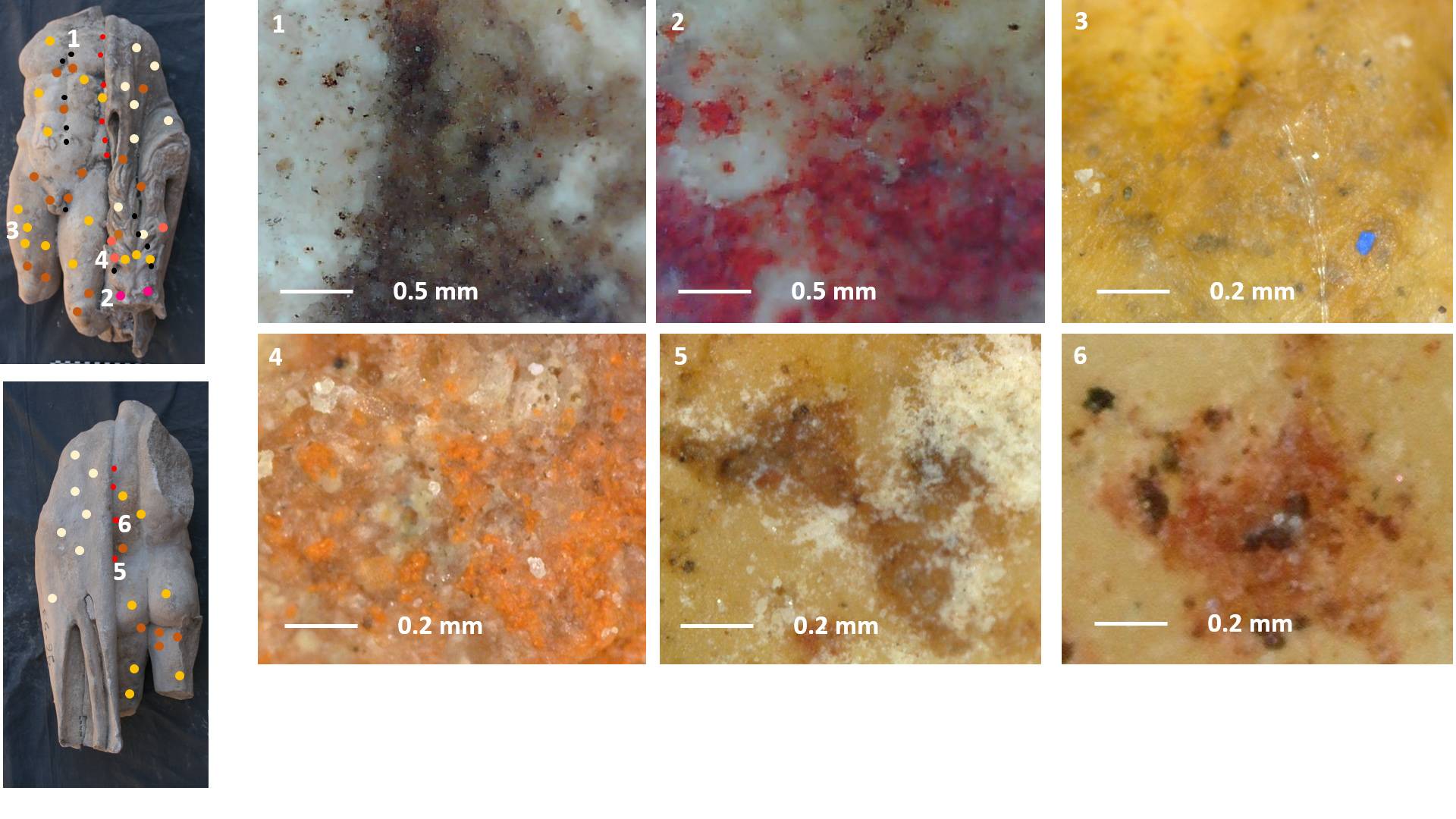
- Despite the numerous concretions, traces of black, yellow, red and orange color are found on the body, on the front and back face, and on the lion skin.
- Imaging
- The yellow and orange colours appear black under UV light, probably due to the strong concentration of iron in the pigments. Microscopic examination confirms the palette and distribution of the traces.
Polychromy technique
- Under painting traces
- no
- Pigments
- Black, yellow, red, orange.
- Binder
- n.d.
- Stratigraphy
- n.d.
- Shading
- Red lines between lion skin and body.
- Metallic traces
- no
- Tools marks
- no
- Background colour
- no
- Apparent marble parts
- no
- Restorations
- no
- Polychromy technique
- The skin has a yellowish coloration highlighted by a black line that draws the torso muscles and pubis. The lion's skin and torso are separated by a red shadow. The lion's skin is orange at the shoulder and yellow-orange on the animal's fur. The furrows of the locks are highlighted by brown and red strokes while the animal's eyes are highlighted in bright red and brown.
Polychromy type
- Imitation of other supports
- metal
- coloured marbles
- Polychromy type
- The color code makes use of bright colors, far from a naturalistic rendering, which could suggest a desire to imitate a polychrome marble statue.
Bibliography
- Bibliography
- Manca titolo del contributo.