
Statuette of Apollo Citharoedus (inv. no. RA 172-30369)
Item
- Description
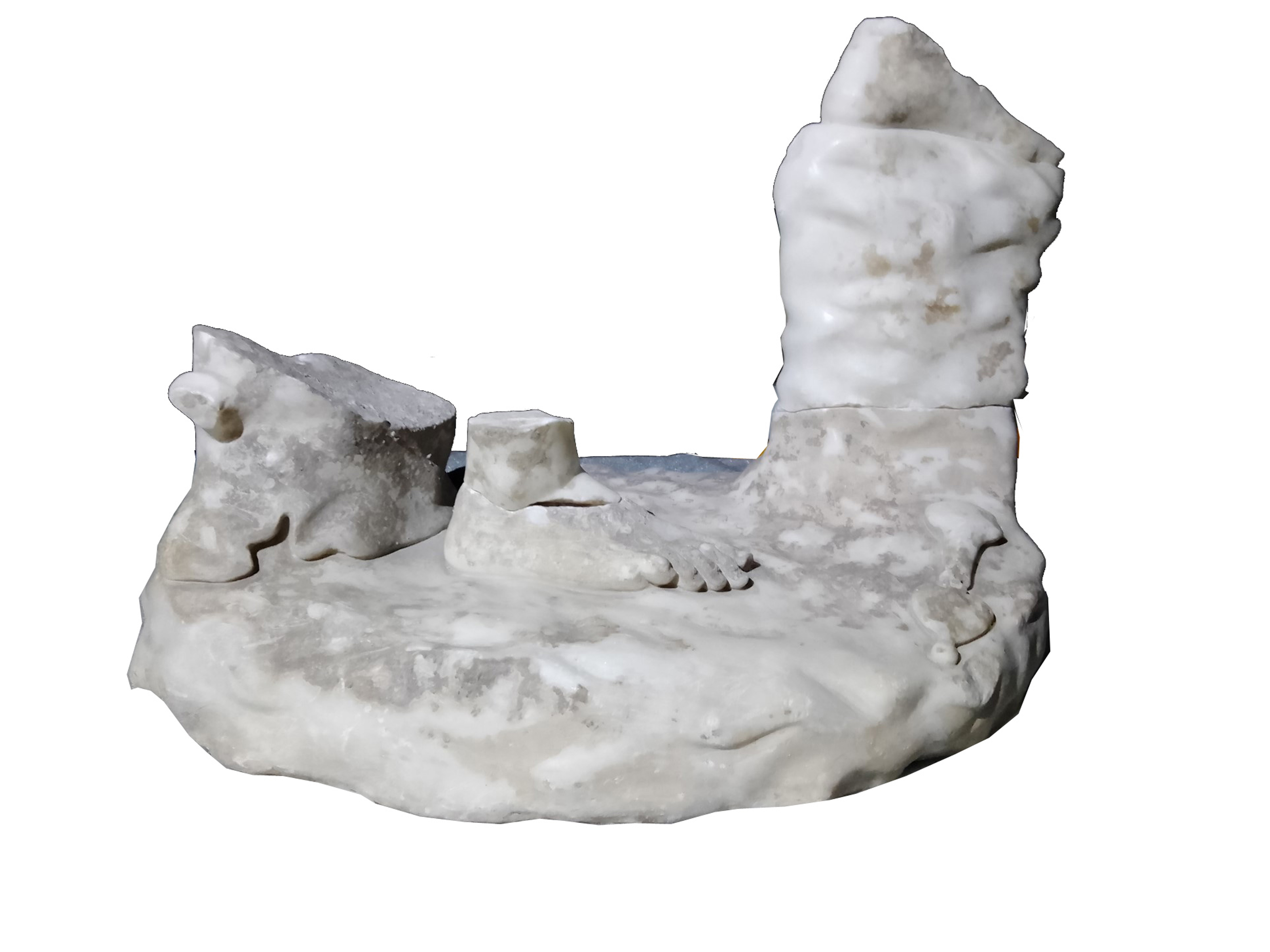
- This fragmentary base was discovered during the excavations of 1897-1899, led by L. Joulin. It's considered a Roman copy of the type of Praxiteles' Lycian Apollo and compared to the type of Apollo in the Palazzo Grimani (Venice), it is dated to the 1st-2nd century AD. The statuette differs from the original type only in three elements: a plectrum on the ground, the rock which replaces the tree trunk and no snake. It was part of a series of statues that decorated the atriums and gardens of the villa in Late Antiquity.
Artwork
- Typology
- Ideal sculpture
- Definition
- Statuette of Apollo Citharoedus (inv. no. RA 172-30369)
- Collection
- Toulouse, Musée Saint-Raymond
- Inventory number
- RA 172-30369
- Provenance
- Chiragan, Roman Villa
- Date
- 2nd c. CE/ restoration IV c. CE
- Material
- White marble, probably Asian
- Dimensions
-
Length: 38,5 cm; Height: 58 cm.
Analytical results
- Analytical methods
- VIS
- UV
- MAXRF
- MO VIS
- MO UV
- Autoptic examination
- Traces of color are still visible over the entire surface; the stratigraphy of different pictorial layer is perceivable to the naked eye. There is brownish-gray layer covering a thick, opaque white preparation. Visual examination under UV light confirms the presence of several pictorial layers and provides a better understanding of the distribution of the more superficial layer, which appears dark black (a typical hematite signal), while the white layer exhibits a slight orange fluorescence. The treatment and stratigraphy are identical on the supports, feet, and leg.
- Imaging
- MA-XRF analysis documented the presence of lead in the white layer, while the iron in the more superficial brown-gray layer suggests the use of hematite and therefore ochres. Spot analysis of the rock to ensure the chromatic finish in contact with the marble detected the presence of copper, probably used in the green pigments. The presence of green suggests that, as in the classical archetype of the Lycian Apollo, it could be seen as a tree or plant element.
Polychromy technique
- Under painting traces
- no
- Pigments
-
phase 1: green, orange, grey, black;
phase 2: lead white, ochre. - Binder
- n.d.
- Stratigraphy
- Preparation layer of lead white (phase 2)
- Shading
- no
- Metallic traces
- no
- Tools marks
- no
- Background colour
- tenon: green
- Apparent marble parts
- no
- Restorations
-
Two phases:
I. Polychrome
II. Monochrome - Polychromy technique
-
imitation of silver (phase 2).
The polychromy technique and the palette used in the second phases has some divergences from those of the pilasters and the clipeus: the first phase has bright and translucent tones (orange, green, gray applied directly to the marble); the later, more superficial ones are presented with a matte and covering primer that gives a less shiny and variegated effect to the piece, which must have had a duller, more sober and uniform appearance.