-
Under painting traces
-
no
-
Pigments
-
white calcium sulfate, ochres (orange, yellow, red), black vegetal sandyx.
-
Binder
-
n.d.
-
Stratigraphy
-
Preparation layer of calcium sulfate
-
Shading
-
darker gradient
-
Tools marks
-
no
-
Background colour
-
black
-
Apparent marble parts
-
no
-
Restorations
-
no
-
Polychromy technique
-
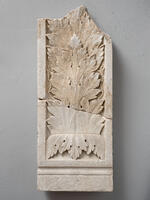
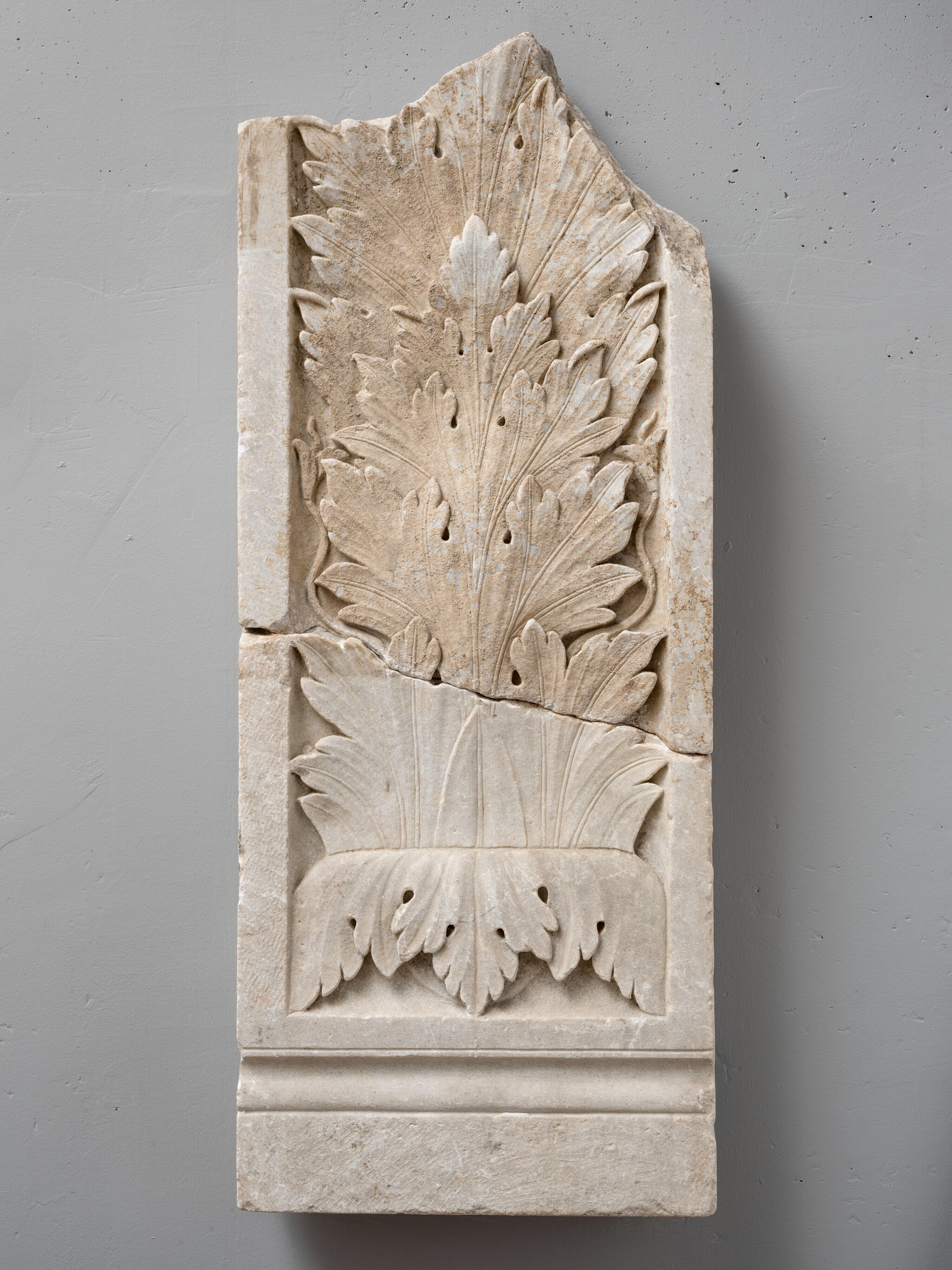
This pillar, the RA23e and the capital 2000.180.1, have a similar color code, characterized by nuanced trichromy. The background and the frames have traces of gray-noir, the lower leaves have red spots, in the middle we found orange elements and in the upper register leaves have gray points, like the nervation of the upper leaves.
In the pillar RA23c we found 23 spots of black in the background, 42 points of brown in the edges, dark red on the stems and yellow or orange with gray nervations on the leaves (39 spots).
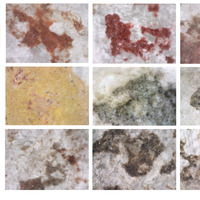
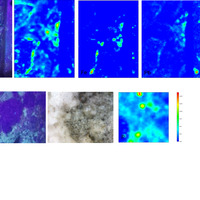
The MA-XRF analyses revealed a preparatory layer of calcium sulphate in all documented areas. The vegetal elements are coloured with a lead and haematite based pigment that makes shades of yellow, red and orange. It could be sandyx or minium mixed with ochres. The nervations and leaf edges are enhanced with manganese black. The black background is probabily made by bone black.

 RA23c_fig.2
  RA23c_fig.3