
Portrait of a charioteer (inv. no. B172)
Item
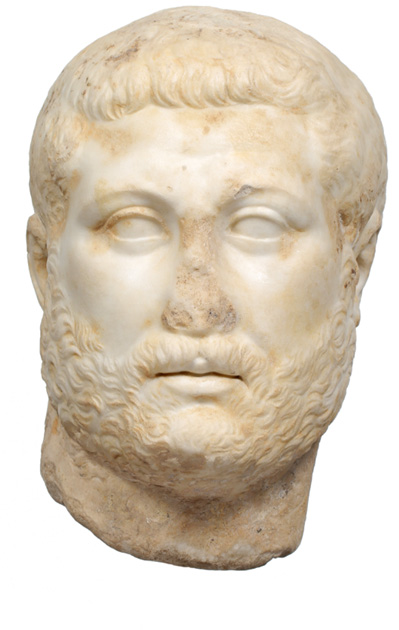
- Description
- The head depicts a bearded male character very similar to the group of charioteers from the small sanctuary dedicated to Hercules Cubans, located between the Porta Portuensis and the station of Trastevere. The beard makes it very similar to a head of Emperor Hadrian preserved in the Museo Nazionale Romano - Diocletian's Baths.
Artwork
- Typology
- Portrait
- Definition
- Portrait of a charioteer (inv. no. B172)
- Collection
- Mariemont, Royal Museum.
- Inventory number
- B172
- Provenance
- Bought in Rome in 1896 by Warocqué, it was probably found a few years earlier between Porta Portese and the Church of San Pancrazio. Probably part of a group of charioteers from the roman sanctuary of Hercules Cubans.
- Date
- 2nd c. CE
- Material
- White marble.
- Dimensions
- Height: 26 cm.
Analytical results
- Analytical methods
- VIS
- UV
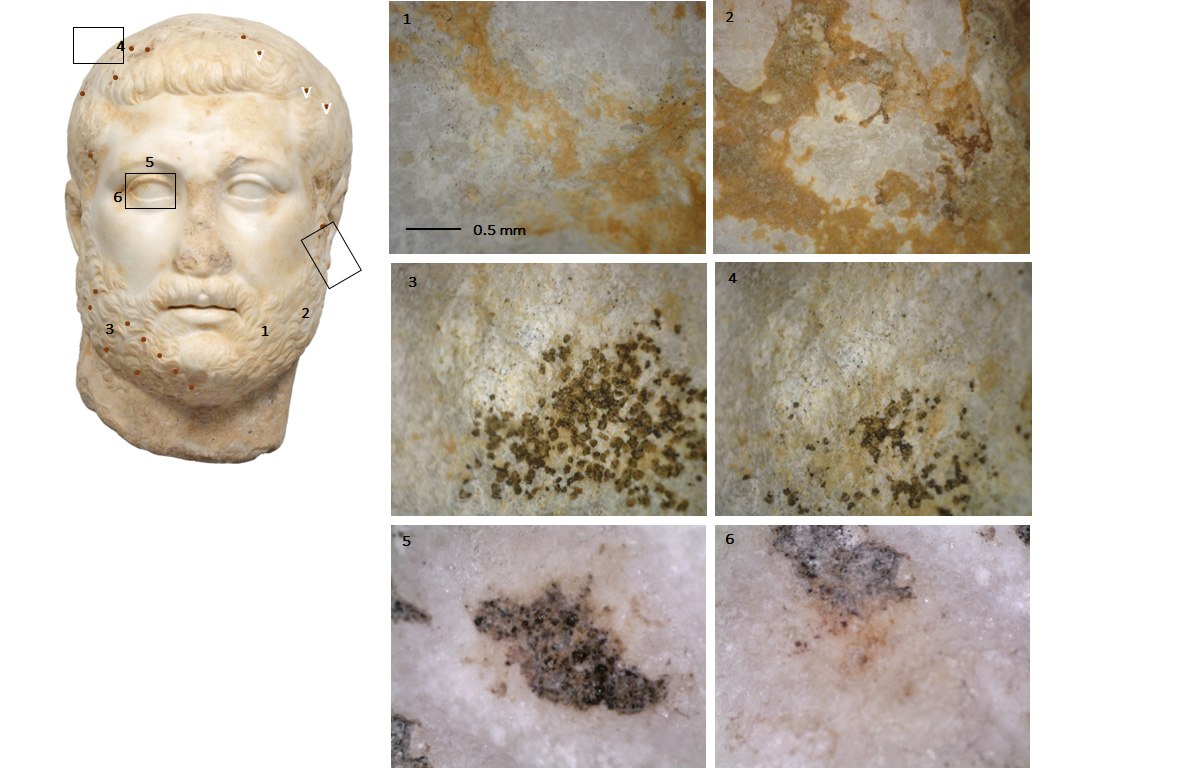
- MO VIS
- MO UV
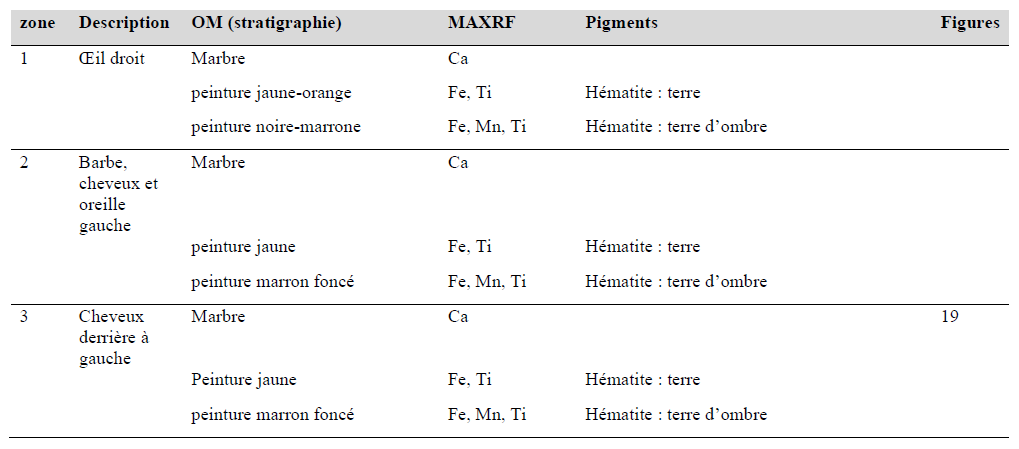
- MAXRF
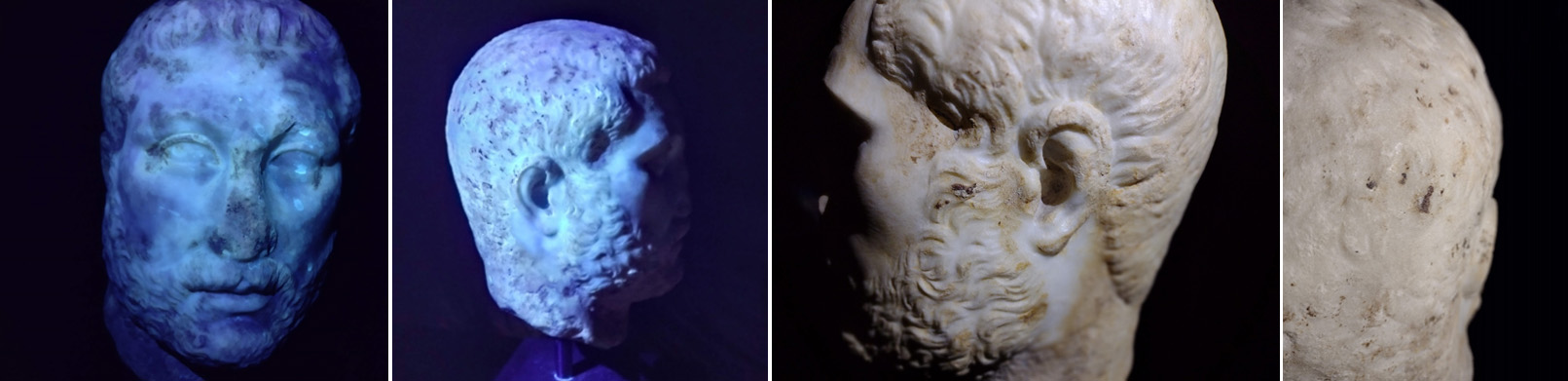
- Autoptic examination
- Traces of yellow and brown are still visible to the naked eye on the beard, hair, right eye and skin.
- Imaging
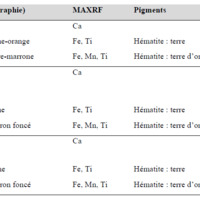
- The traces of colour visible to the naked eye appear black-brown, on a yellow preparatory layer, under UV observation. The stratigraphy is confirmed by microscopic observations.
Polychromy technique
- Under painting traces
- Black traces around the eyes?
- Pigments
- Ochres (yellow), manganese-rich ochres.
- Binder
- n.d.
- Stratigraphy
- Pigments directly on marble.
- Shading
- Black dots on the beard.
- Metallic traces
- no
- Tools marks
- no
- Background colour
- no
- Apparent marble parts
- no
- Restorations
- no
- Polychromy technique
- On the skin of the forehead and around the eyes there is a very thin and translucent yellow-orange color, perhaps applied in a very diluted layer. The eyes show the same stratigraphy. The eyelid of the right eye and the contours are surrounded in black. The hair and beard have a bright yellow color, with strands highlighted in black and brown. The shading layer is made up of dots that let see the underlying yellow layer.
Polychromy type
- Imitation of other supports
- metal
- Polychromy type
- The portrait should then appear in yellow and yellow-orange with black strokes to highlight the eyes, hair and beard. The palette perhaps wanted to imitate an original in polychrome bronze.
Bibliography
- Bibliography
- Manca il titolo della pubblicazione?