-
Description
-
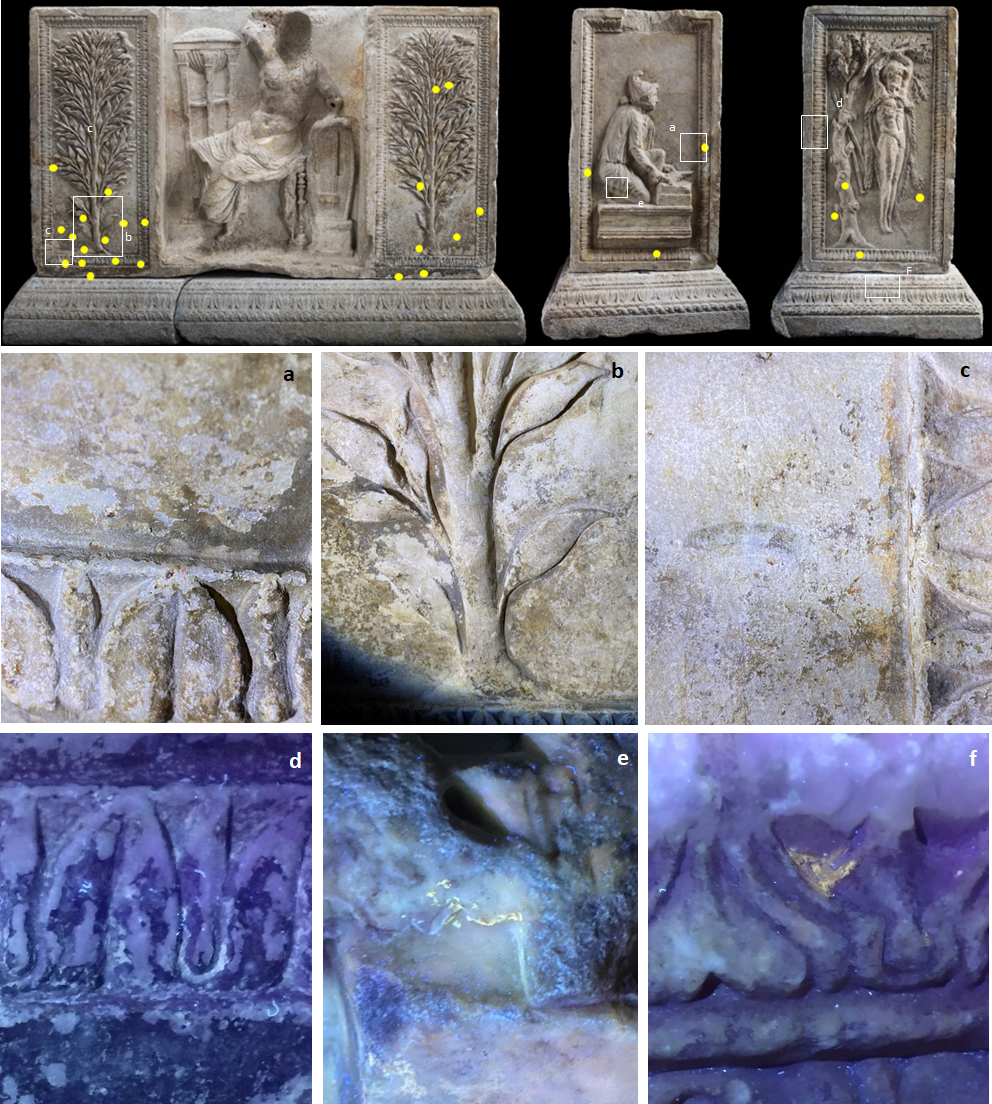
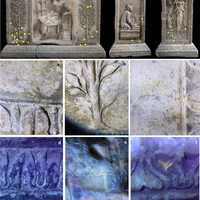
From the theatre of Arles. At the center, the seated god—whose head was removed, leaving a large cavity—is shown with legs wrapped in a cloak, the right arm resting on his head, and the left arm leaning on a lyre. In the background, the Delphic tripod is as tall as the god himself. On the projections of the altar, framing the scene, laurels are depicted with foliage inhabited by birds.
The right side of the altar shows the Scythian sharpening his knife, while on the left side, Marsyas is depicted hanging from a tree. The myth recalls the hybris punished by Apollo—an allusion to Antony's punished by Augustus. The laurels and tripod on the main face would therefore symbolize the dual victory of Augustus and Apollo.
Artwork
-
Definition
-
Altar of Apollo (inv. no. FAN.1992.357)
-
Collection
-
Arles, Musée Départemental de l'Arles Antique
-
Inventory number
-
FAN.1992.357
-
Date
-
I century C.E. and IV century A.D. (the secondo phase)
-
Material
-
Marble of Carrara
-
Dimensions
-
Width: 45 cm
Height: 127 cm
Depth: 150 cm
Polychromy technique
-
Under painting traces
-
no
-
Pigments
-
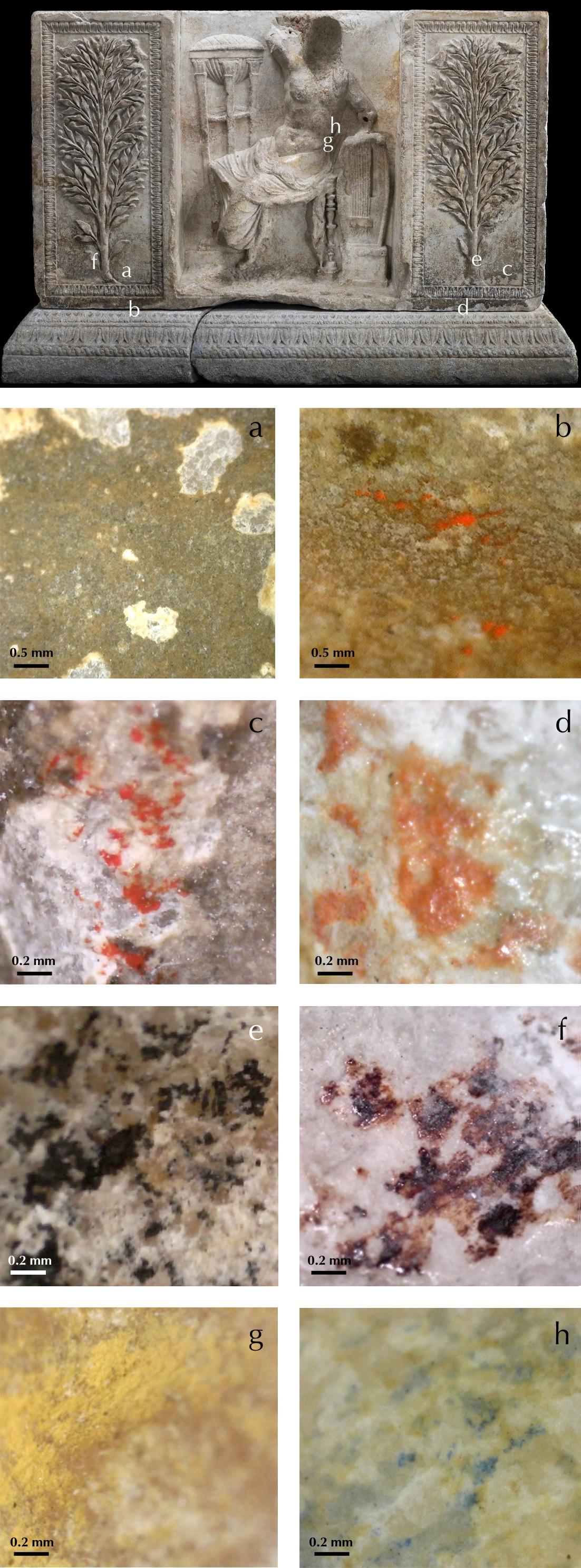
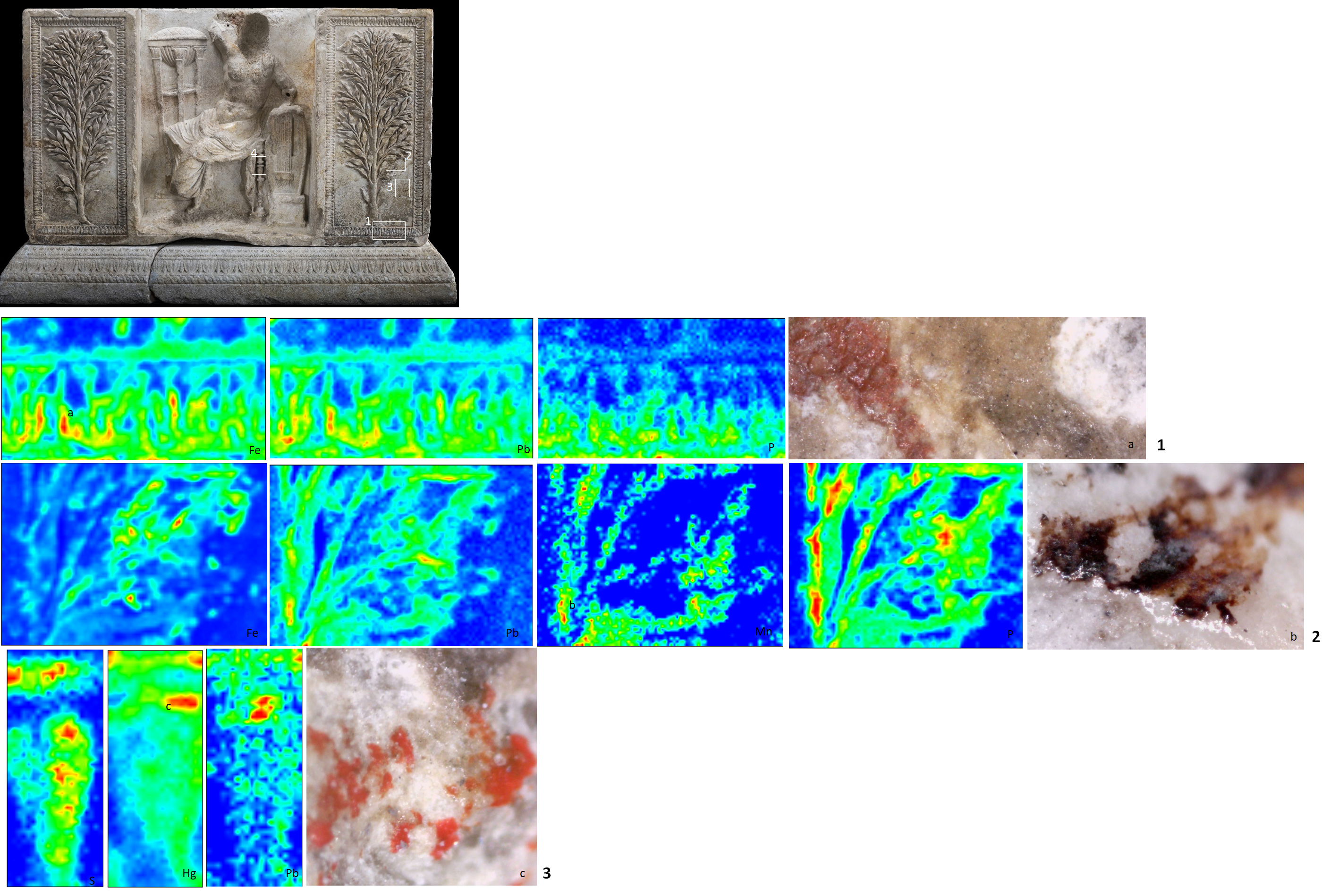
vermilion, ochre, Egyptian blue, sandyx, manganese-enriched earths (violet)
-
Binder
-
n.d.
-
Stratigraphy
-
Phase II: preparatory layer in zinc and lead
-
Shading
-
no
-
Tools marks
-
no
-
Background colour
-
Phase I: vermilion red
-
Apparent marble parts
-
no
-
Restorations
-
Two phases:
I. Polychrome
II. Monochrome
Polychromy type
-
Imitation of other supports
-
metallo
-
Highlighting motifs
-
Phase I: chromatic correspondence and symbolic use of color
-
Polychromy type
-
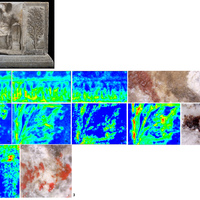
The first state of the altar’s polychromy was characterized by calcium sulfate in the background, probably enhanced with red. The laurels may have had black branches and violet leaves. In the Apollo panel, the color remains are too fragmentary to allow any reconstruction. The two side panels likely had a yellow background, a red frieze, and black figures.
The second state is characterized by a covering preparatory layer made of lead and zinc, with the surface colored using sandyx for the decorative elements and bone black for the background.